
Why Indianapolis Homeowners Need One Contractor for Roofing and Masonry
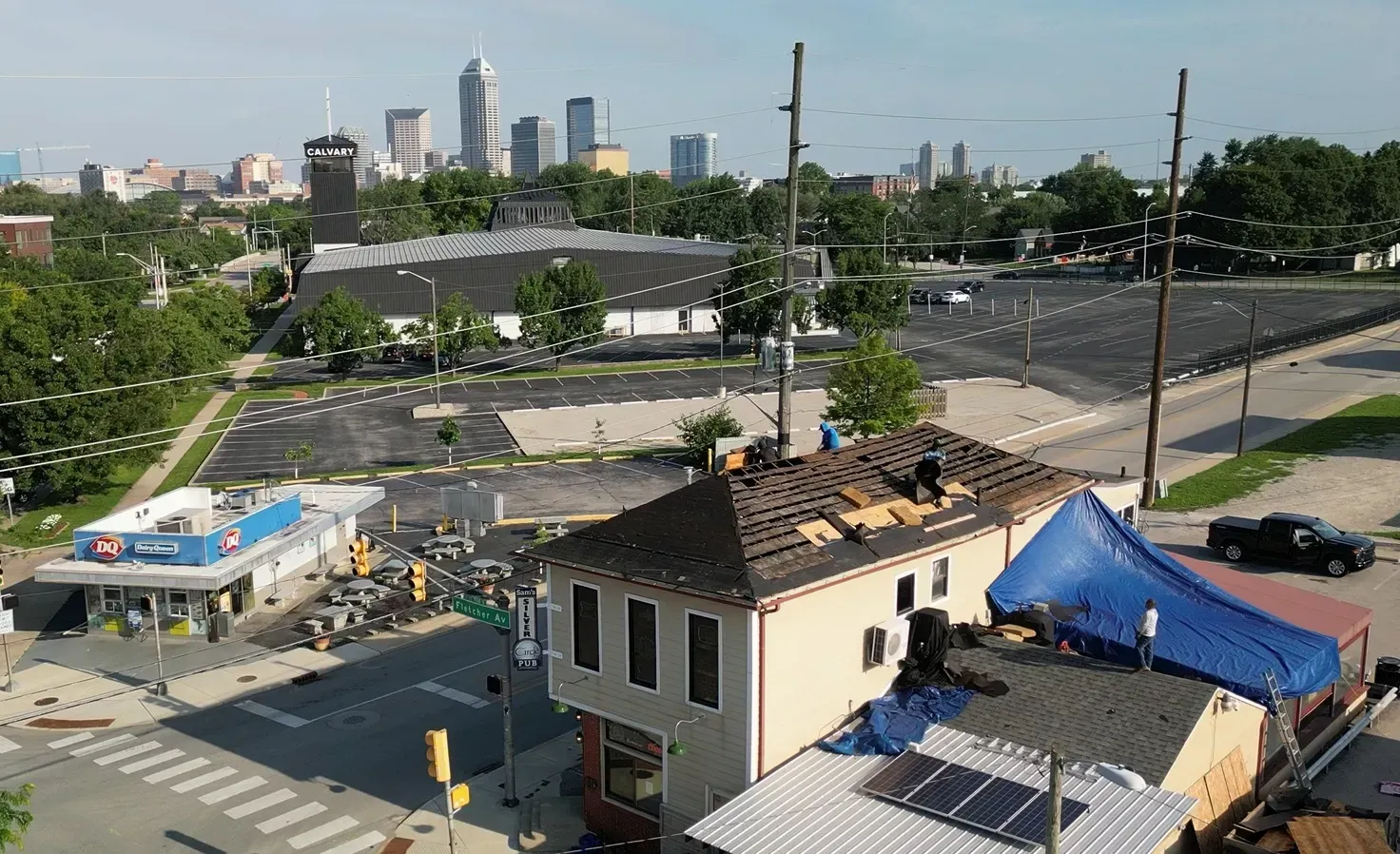
You notice a growing water stain on the ceiling near your fireplace, so you call a roofer. The roofer checks the shingles and tells you the chimney is the problem. You call a mason, who inspects the brick and points back toward the roof.
Meanwhile, every new rainstorm gives water another chance to damage your ceiling, insulation, framing, and fireplace area.
This “finger-pointing problem” is common because a chimney leak often develops where two trades meet. For chimney flashing repair in Indianapolis, you need a contractor who understands how roofing, flashing, brick, and mortar work together—not two contractors inspecting only their side of the problem.
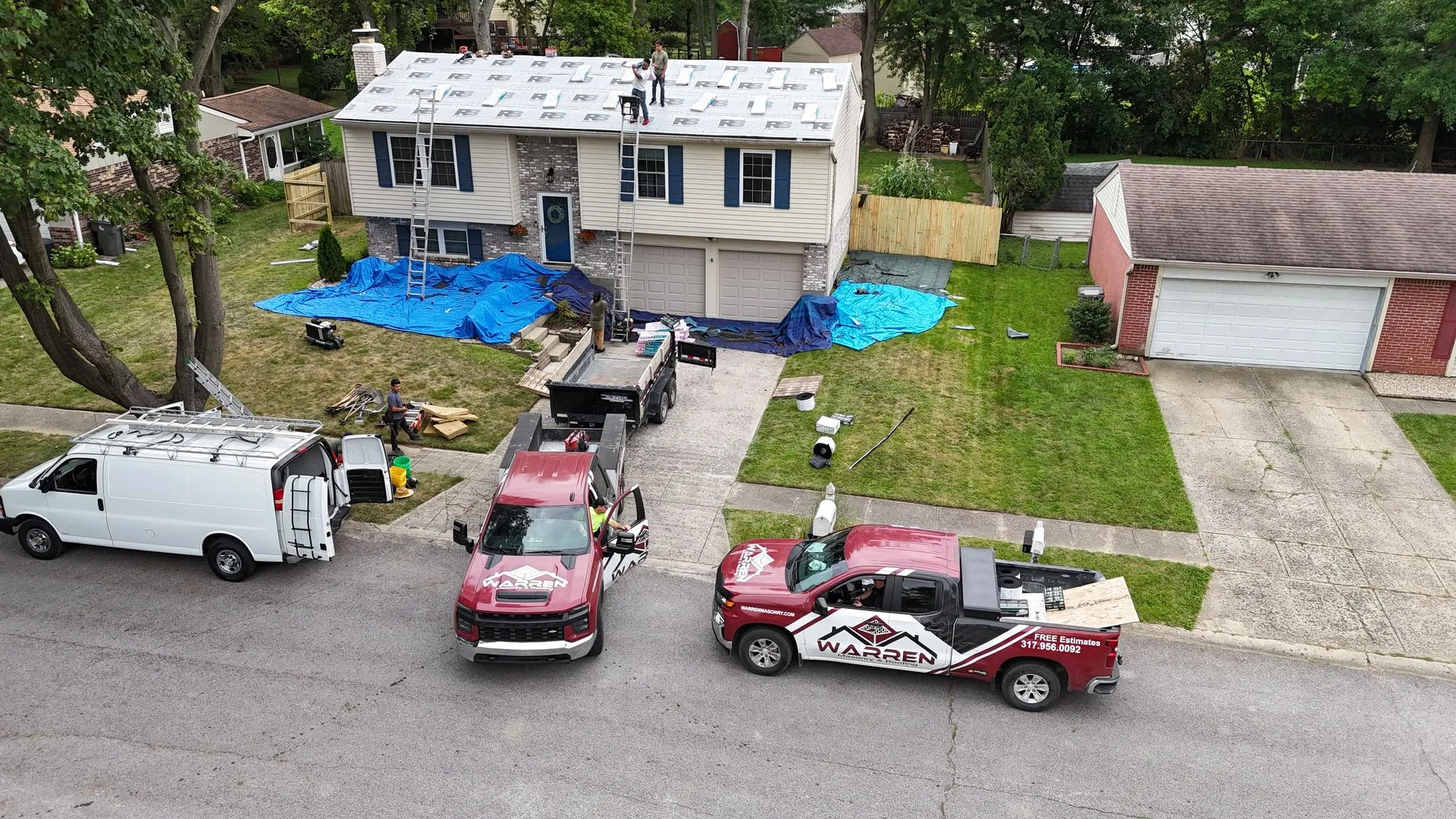
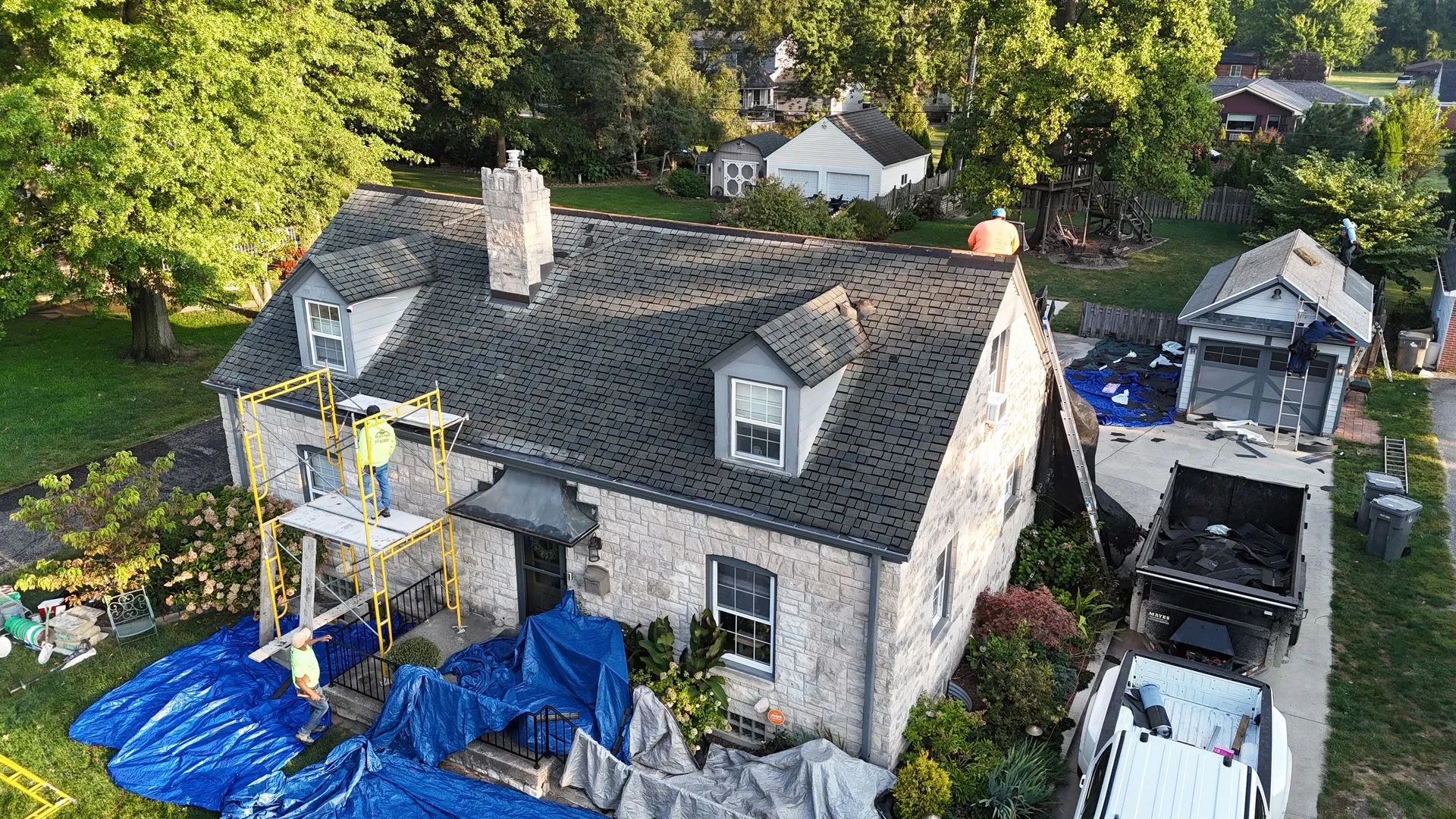
At Warren Masonry & Roofing, we have served Indianapolis and Central Indiana since 1978. Because we handle both roofing and masonry, we can follow the full path of a leak instead of stopping where one trade ends.
Why Chimney Flashing Repair in Indianapolis Requires Both Trades
Your roof and chimney are separate structures, but they must function as one water-management system. A leak can begin in the shingles, metal flashing, mortar joints, chimney crown, cap, or the connections between them.
Chimney flashing usually includes:
- Base flashing at the lower roof-to-chimney joint
- Step flashing woven between shingles along the chimney sides
- Counter-flashing secured into the masonry above the step flashing
- Corner and transition details that direct water away from vulnerable joints
Flashing sits directly between roofing and masonry. It must work with the shingles to move rainwater down the roof, while also forming a durable seal against the chimney.
If a roofer checks only the shingles, damaged mortar or poorly secured counter-flashing may be missed. If a mason checks only the brick, lifted shingles or incorrectly installed step flashing may go unnoticed.
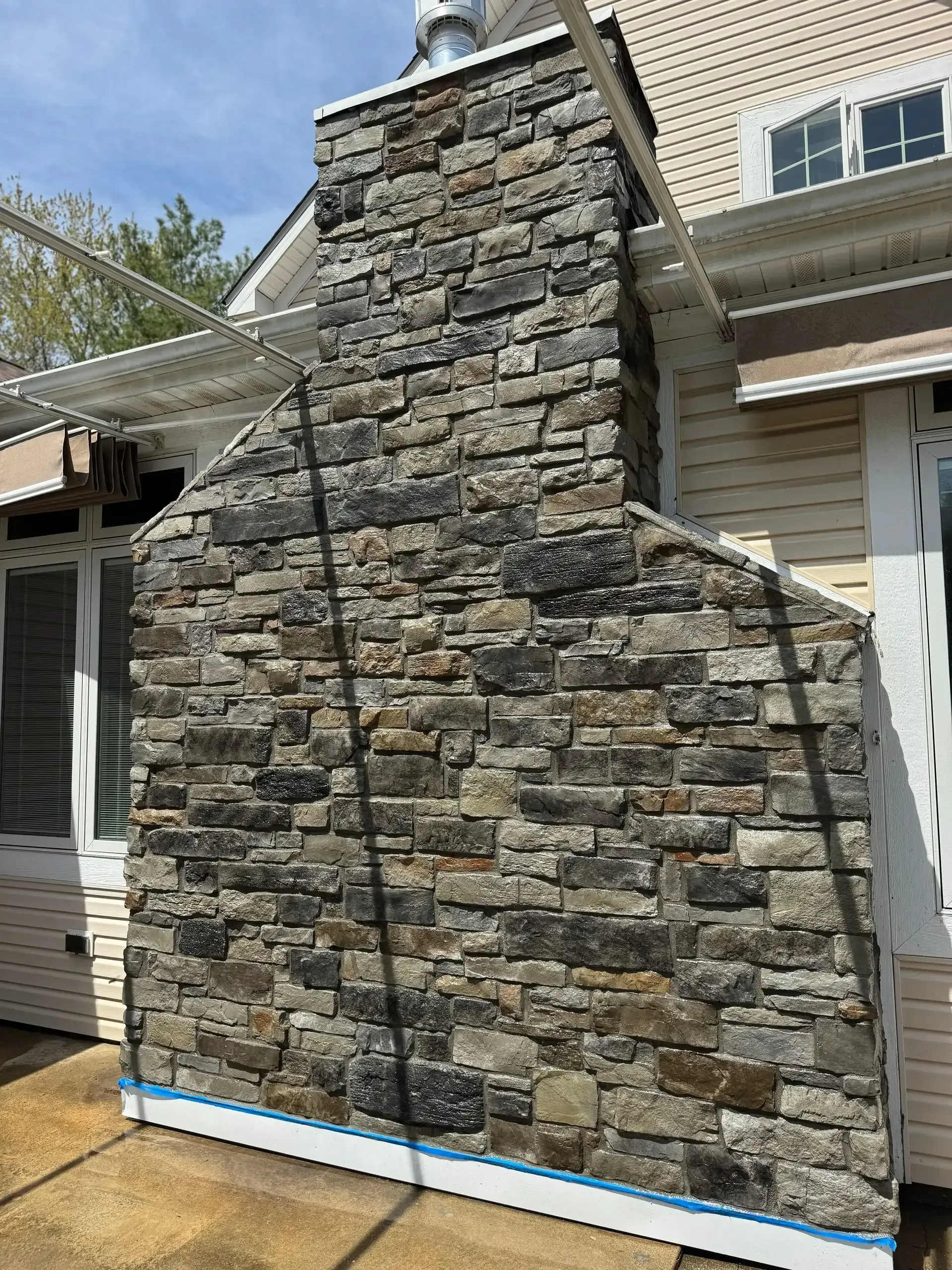
That is why our chimney repair services in Indianapolis evaluate the brick, mortar, crown, cap, flashing, and nearby roofing rather than treating the visible ceiling stain as the entire problem.
The Hidden Cost of Hiring Two Separate Contractors
Hiring separate roofing and masonry contractors can create delays, duplicate charges, conflicting opinions, and repairs that address only part of the leak. While the contractors debate where the problem began, moisture may continue spreading into your home.
You may receive two inspection fees, two repair scopes, and no clear answer about who is responsible if the leak returns.
| Two Separate Contractors | One Roofing-and-Masonry Contractor |
|---|---|
| Each contractor inspects only part of the system | One team evaluates the complete leak path |
| Diagnoses may conflict | Findings are coordinated |
| Separate scheduling and invoices | One scope and point of contact |
| Flashing may fall between the two trades | Roofing and masonry transitions are addressed together |
| Warranty responsibility may be unclear | One company provides a coordinated scope and clearly defined warranty responsibility |
For example, replacing shingles around your chimney will not stop water entering through open mortar joints higher on the structure. Repointing the chimney will not solve water entering beneath improperly installed step flashing. A repair can look complete from the outside while water continues entering through an untreated connection.
The solution must address the actual water path, not simply the first visible defect.
Why Indianapolis Weather Makes Chimney Leaks Worse
Indianapolis weather repeatedly exposes your roof and chimney to rain, hail, wind, snow, and changing temperatures. A small flashing gap or mortar crack can become a larger leak after repeated storms and freeze-thaw cycles.
The U.S. Geological Survey explains that ice is about 9% less dense than liquid water. As trapped moisture freezes and expands inside porous brick or mortar, it can widen cracks and loosen the surrounding material.
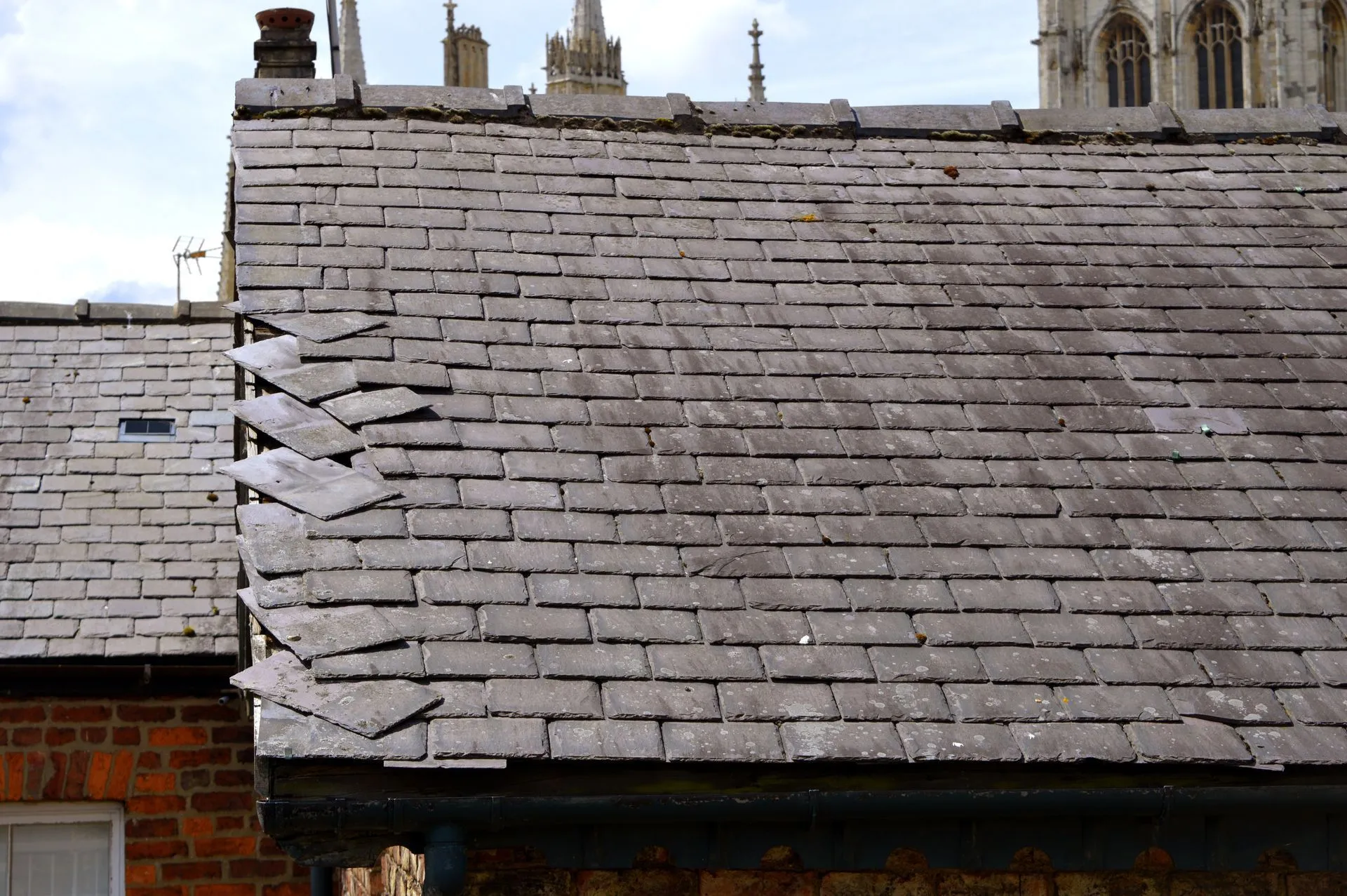
Hail can also damage more than the visible surface of your roof. The Insurance Institute for Business & Home Safety identifies dents, tears, and granule loss as common forms of hail damage to asphalt shingles.
Around your chimney, the same storm may affect:
- Shingles
- Flashing edges
- Sealant joints
- The chimney crown
- The chimney cap
- Already weakened brick and mortar
You may not see obvious holes or missing shingles from the ground. Damage can remain unnoticed until moisture reaches the attic, ceiling, or fireplace area weeks or months later.
After a strong storm, watch for:
- New ceiling stains near the chimney
- Damp insulation or discoloration in the attic
- Loose flashing or lifted shingles
- Shingle granules collecting in gutters
- Cracks in the chimney crown
- Fresh mortar cracks or flaking brick
- Rust near the firebox or damper
What Freeze-Thaw Cycles Do to Brick and Mortar
Freeze-thaw damage begins when moisture enters porous brick or deteriorated mortar. As that moisture freezes and expands, it can loosen brick faces, widen joints, and weaken the chimney over repeated cycles.
Indianapolis winters are especially challenging because temperatures often move above and below freezing. A rainy afternoon may be followed by an overnight freeze, allowing the same damp masonry to expand and contract repeatedly.
Common warning signs include:
- Spalling or flaking brick faces
- Crumbling or deeply recessed mortar joints
- Stair-step cracks
- White staining, known as efflorescence
- Loose bricks near the chimney top
- Gaps where flashing meets the masonry
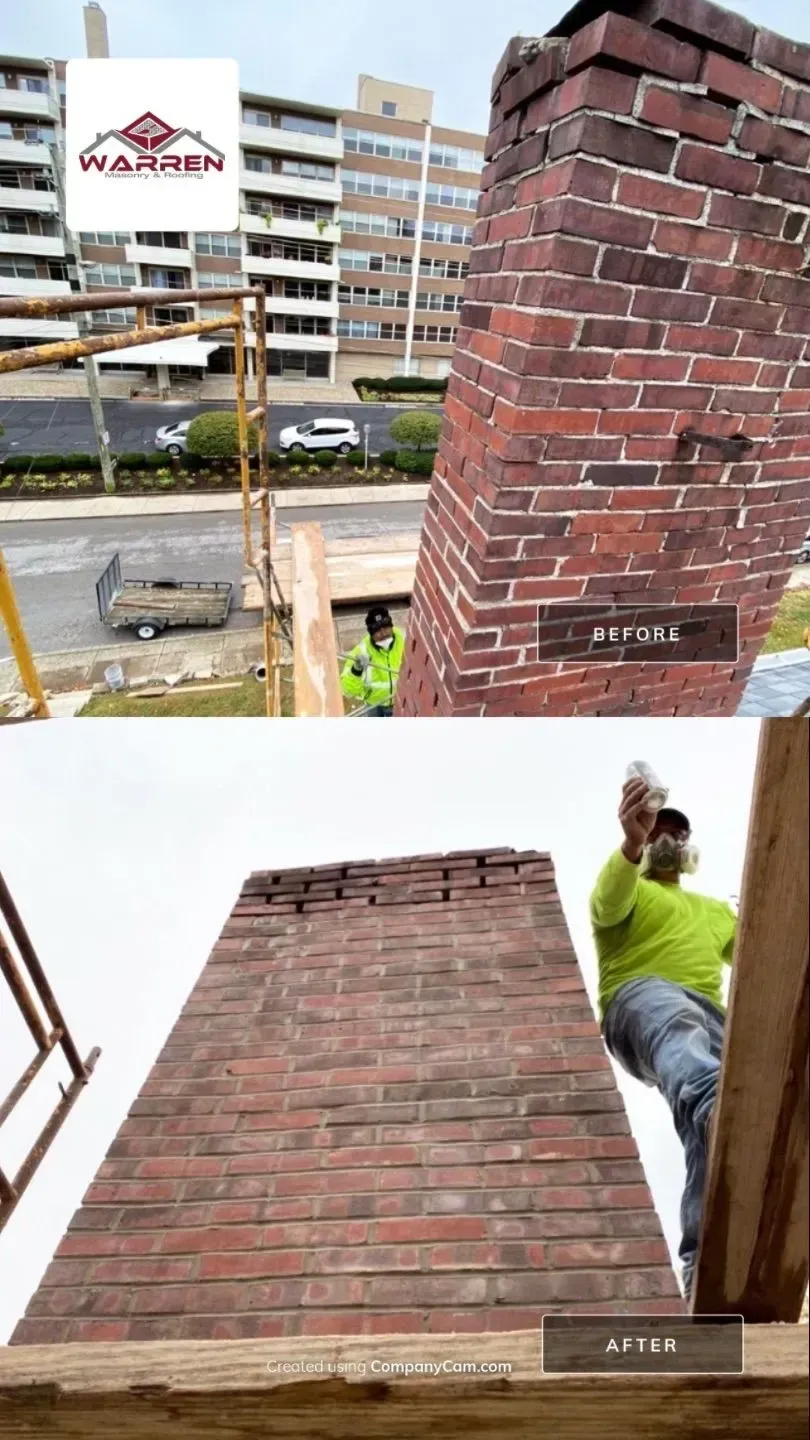
Minor joint deterioration can often be addressed with professional tuckpointing and repointing in Indianapolis. Damaged individual units may require brick repair or replacement.
The earlier you address these warning signs, the better. Repairing several open joints before another wet winter is usually more manageable than rebuilding a chimney after widespread deterioration or movement develops.
Historic Indianapolis Homes Need Compatible Materials
Older brick homes need mortar that is compatible with the original masonry, not simply the hardest or newest product available. Mortar that is too hard or dense can trap moisture or transfer normal building movement into softer historic brick.
This matters in established Indianapolis neighborhoods such as:
- Irvington
- Fountain Square
- Meridian-Kessler
- Broad Ripple
- Butler-Tarkington
Many homes in these neighborhoods have masonry materials and construction details that differ from those used in newer buildings. Applying a standard modern mortar without evaluating the original brick can cause the repair to fail or damage the surrounding masonry.

The National Park Service recommends matching the existing mortar’s hardness, permeability, color, and joint profile. It also warns that hard mortars containing high concentrations of Portland cement can accelerate deterioration in softer historic brick.
A qualified contractor should:
- Inspect the existing brick and mortar.
- Determine whether the damage is caused by moisture, movement, or material failure.
- Select a compatible mortar rather than using one mixture for every property.
- Match the original joint profile and finish.
- Coordinate the masonry repair with roof flashing and drainage details.
When a Chimney Needs Repair, Rebuilding, or Replacement
A chimney can often be repaired when damage is limited to mortar joints, individual bricks, the crown, cap, or flashing. A partial or full rebuild may be necessary when deterioration is widespread, the chimney is leaning, or major sections have become unstable.
Use this general guide:
| Chimney Condition | Likely Next Step |
|---|---|
| Small mortar gaps or localized cracks | Tuckpointing or targeted repair |
| A few spalled or broken bricks | Individual brick replacement |
| Failed flashing with otherwise sound masonry | Flashing repair or replacement |
| Cracked crown or missing cap | Crown or cap repair |
| Widespread brick and mortar deterioration | Partial or full chimney rebuild |
| Leaning or unstable chimney | Structural evaluation and likely rebuild |
Our chimney rebuild services in Indianapolis include proper integration with the surrounding roof and water-management system. You can also read our guide explaining how to know when chimney replacement is the right choice.
What a Complete Chimney and Roof Inspection Should Include
A complete inspection should identify the likely source of water entry and document related roofing and masonry damage before permanent repairs begin. You should receive a clear explanation of what failed, what remains sound, and how the proposed repairs work together.
A thorough inspection should cover:
- Shingles and roof decking around the chimney
- Base, step, and counter-flashing
- Flashing corners and sealant joints
- Mortar joints and brick faces
- The chimney crown, wash, and cap
- Signs of movement or leaning
- Attic, ceiling, and fireplace moisture evidence
- Gutters and drainage near the chimney
- Photographs of damaged and sound areas
- A written repair scope
Regular exterior checks can also help you catch small problems before they reach your home’s interior. Our guide to masonry maintenance for Indianapolis properties explains what to watch for on chimneys, brick walls, steps, and porches.
What to Do After Hail, Wind, or a New Leak
After a storm or a new water stain, document the damage, prevent additional water entry when you can do so safely, and notify your insurer promptly. Avoid climbing onto a wet or damaged roof yourself.
Follow these steps:
- Photograph the damage. Record interior stains and exterior damage that you can safely see from the ground.
- Prevent additional damage. Take reasonable temporary steps, such as placing a container beneath an active drip or moving valuables away from the affected area.
- Review your policy and notify your insurer promptly. Follow the reporting requirements stated in your policy.
- Arrange professional documentation. Ask for a coordinated roofing-and-masonry inspection with photographs and a written scope.
- Wait before authorizing permanent repairs. Do not begin permanent work until the insurer has inspected the damage or approved the repair, unless emergency action is needed to protect the property.
- Keep complete records. Save photographs, reports, estimates, receipts, emails, claim numbers, and notes from phone conversations.
The Indiana Department of Insurance recommends notifying your insurance company as soon as possible. It also advises property owners to make only reasonable temporary repairs before the insurer evaluates the damage.
Your exact notice requirements and coverage depend on your individual policy. Do not rely on a general online filing deadline.
Protect Your Roof and Chimney With One Accountable Team
The most complete approach to a chimney leak is to inspect the roof and masonry as one connected system. With one contractor coordinating the diagnosis and repair, you reduce finger-pointing and improve the chance that the complete water-entry path is addressed.
Warren Masonry & Roofing provides roofing, chimney, flashing, tuckpointing, and brick-repair services across Indianapolis and nearby Central Indiana communities. Call
(317) 956-0092 to request a free roofing or masonry inspection or estimate.
FAQs About Roofing and Masonry
How do I know whether my chimney leak is a roofing or masonry problem?
You usually cannot identify the source from the interior stain alone. Water may enter through flashing, shingles, mortar, the chimney crown, or several components together, so the most useful first step is an inspection covering both trades.
What does chimney flashing repair in Indianapolis involve?
The work may include resealing a minor joint, replacing damaged metal, rebuilding flashing corners, or installing new step and counter-flashing. Your contractor should also address masonry defects that prevent the flashing from being secured and shedding water properly.
Can hail damage my roof without causing missing shingles?
Yes. Hail can dent shingles, displace protective granules, or create tears that are difficult to see from the ground. A close inspection is especially important around chimneys, valleys, vents, and roof edges.
When does a chimney need tuckpointing?
Tuckpointing may be appropriate when mortar is cracked, loose, crumbling, or deeply recessed but the bricks and overall structure remain stable. Your contractor should first determine why the joints deteriorated and choose a compatible replacement mortar.
Does mortar type matter on an older Indianapolis home?
Yes. Mortar that is too hard or impermeable can damage softer historic brick. The replacement mortar should be chosen to match the existing masonry’s physical properties and appearance.
Recent Posts